

Patient and carer stories
Nothing is more powerful than hearing directly from patients and carers—their experiences of diagnosis and the paths their lung cancer journeys have taken. Below are personal stories from members of the Australian community, offering insight, perspective, and inspiration.
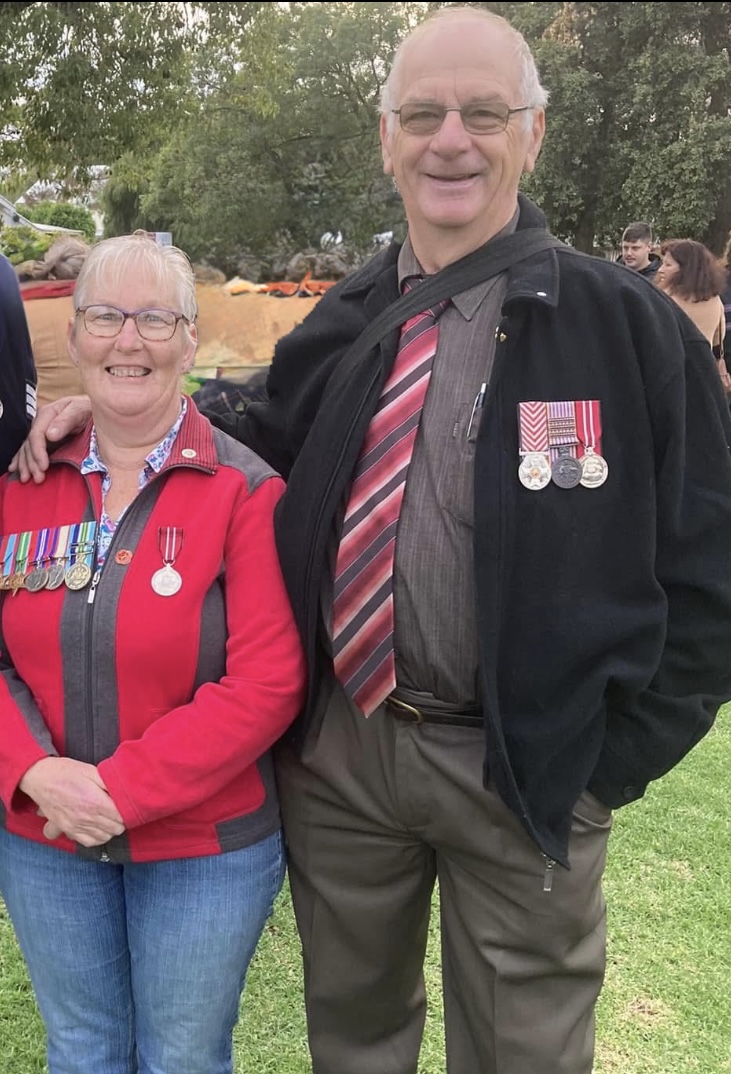
Mal McCann
Carer
After being diagnosed with lung cancer in 2017, following months of worsening chest infections, Mal’s wife Deb underwent a lobectomy and chemotherapy, only to discover several months later that her cancer had spread to her ovary and was now stage 4. Targeted therapy helped control her ROS1-positive non-small cell lung cancer, although serious side effects, ongoing scans and uncertainty brought significant physical and emotional challenges for Deb and Mal.
The diagnosis transformed their lives, prompting them to move to South Australia during COVID to spend precious time with their son and grandsons. Throughout their journey, they have also faced the stigma surrounding lung cancer, despite Deb never having smoked. Finding Lung Foundation Australia provided much-needed information, support and connection, inspiring them to become advocates for greater research funding, improved care and awareness. Grounded in their Christian faith and strengthened by helping others, Deb and Mal encourage people affected by lung cancer to seek support, connect with peers, ask questions and advocate for themselves, reminding them that they do not have to navigate this journey alone.
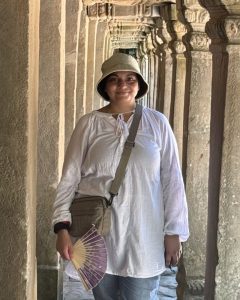
Sharmila Lakshmi
Patient
Sharmila is a wife and mother of three young children, including twin teenage daughters and a nine-year-old son, and was diagnosed with stage 4 ALK-positive lung cancer in December 2022, just before Christmas. The unexpected diagnosis profoundly affected her family and strengthened her determination to be there for her children as they grow into resilient young adults. She is deeply grateful for the Lung Foundation Australia’s Lung Cancer Peer Support Group, where people share experiences, offer comfort without judgement, and become one another’s cheer squad through the highs and lows of cancer treatment. She believes peer support provides a safe space for connection, friendship and emotional wellbeing, and celebrates the generosity, strength and compassion of its members and leaders.
Rather than allowing cancer to define her life through sadness, Sharmila views her diagnosis as a gift that opened her eyes to the beauty surrounding her and the preciousness of every moment. She is determined to live fully, thrive for herself and her family, and create lasting memories for her children. Her message to others is to truly live life by being present, appreciating the simple pleasures, embracing the joyful moments and recognising that even life’s challenges and tears can make love, connection and warm embraces all the more meaningful.
Clinicians and researchers
A key objective of the White Daisy Project is to collaborate with clinicians, researchers, and other professionals to advance lung cancer advocacy. While their daily work directly benefits individuals affected by lung cancer, broader collective engagement is essential to reshaping the narrative surrounding this disease, increasing screening rates, and securing critical research funding.
Without sufficient investment, lung cancer will continue to claim more Australian lives than breast, prostate and brain cancers combined. Strengthening collaboration across the clinical, research, and professional communities is therefore vital to driving meaningful progress.
We are deeply appreciative of the scientists and physicians who support the lung cancer community and lead with compassion. These leaders have chosen to extend their influence and expertise beyond their core responsibilities, demonstrating a strong commitment to improving outcomes and creating lasting change.
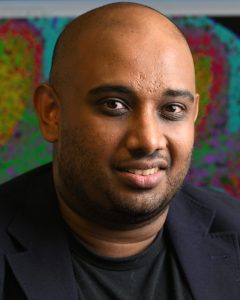
Associate Professor Arutha Kulasinghe
Associate Professor Arutha Kulasinghe is the inaugural Brazil Family Chair in Spatial Medicine and leads the Clinical-oMx Lab at the Frazer Institute, University of Queensland & the Queensland Spatial Biology Centre (QSBC). A/Prof Kulasinghe has pioneered spatial biology approaches, contributing to world-first studies for lung cancer, head and neck cancer and pandemic studies. His research published in >120 peer-reviewed articles aims to understand the underlying pathobiology by using an integrative multi-omics approach and has published in Nature Genetics, The Journal of Clinical Oncology and Lancet Microbe. A/Prof Kulasinghe is supported by the NHMRC, MRFF, Australian Academy of Sciences, US DOD, Cure Cancer and numerous philanthropic and hospital foundations. A/Prof Kulasinghe is the 2023 “Cure Cancer Researcher of the Year,” named in the 2024 Australian “Top Innovators List,” and two Queensland “Power Lists” in 2026 for leaders in medicine, biotech and the life sciences.
Princess Alexandra Hospital and Queensland University of Technology
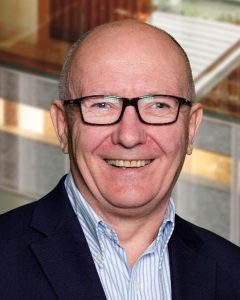
Professor Kenneth O’Byrne
Prof Kenneth O’Byrne is a Medical Oncologist and Clinical Scientist at the Princess Alexandra Hospital (PAH) and the Queensland University of Technology (QUT) Translational Research Institute (TRI) laboratories on the PAH campus. He is clinical director of the Cancer and Ageing Research Program (CARP) www.carp.org.au and a core member of the Clinical-oMx group. He is the founder of the British Thoracic Oncology Group (BTOG), co-founder of the European Thoracic Oncology Platform (ETOP), a board member of the International Mesothelioma Interest Group (iMig) and a member of the International Association for the Study of Lung Cancer (IASLC) Academy and career development and fellowship committees. He sits on the scientific committee of the Thoracic Oncology Group Australia (TOGA) and of the International Society Liquid Biopsy (ISLB). He has been a contributor to ~500 peer-reviewed manuscripts and has patented novel anti-cancer therapeutics and predictive biomarker tests developed in Australia and Ireland.
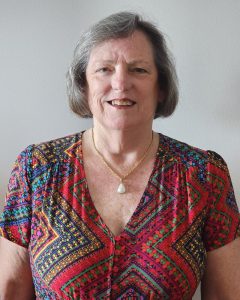
Dr Cynthia Gray
Cynthia Gray is a registered psychologist with the Australian Health Practitioner Regulation Agency (AHPRA) and holds a practice endorsement in clinical psychology.
Cynthia has over 20 years’ experience working as a psychologist. Her area of proficiency includes the treatment of adjustment disorder, depression, anxiety, trauma, adverse life events, perinatal distress, stress, phobias, OCD, insomnia, grief and loss, and adjustment to physical illness – with a special interest in assisting those with cancer, newly diagnosed or chronic.
Before becoming a psychologist, Cynthia worked for many years as both a registered nurse and midwife which has enabled her to have a breadth of knowledge regarding both physical and mental health.
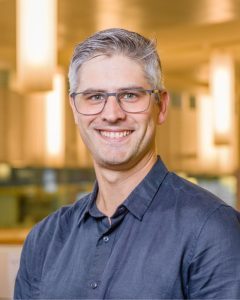
Associate Professor Mark Adams
Associate Professor Mark Adams is a lung cancer researcher at Queensland University of Technology, where he leads a translational research laboratory in Brisbane. For more than a decade his team has worked on a question that matters to every patient: why treatments stop working, and how to make them last longer. By studying the cellular programs that lung cancers rely on to survive chemotherapy and targeted therapy, his group has identified ways to predict treatment response and to make resistant tumours sensitive to therapy again. That work has already produced a biomarker approach and new therapeutic candidates in development for treatment-resistant disease. Mark’s research has been supported by Cancer Australia, Cure Cancer, Tour de Cure, Thoracic Oncology Group Australasia and the IASLC Foundation, and his findings are published in journals including the Journal of Thoracic Oncology and Nature Communications. He is passionate about working closely with people living with lung cancer.
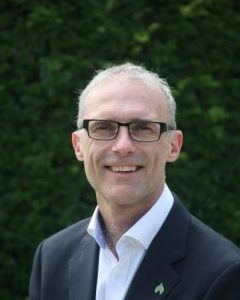
Associate Professor Henry Marshall
Henry Marshall lives in Brisbane. He is a lung specialist doctor at The Prince Charles Hospital and at St Vincent’s Private Hospital Northside. He is a medical researcher at the University of Queensland Thoracic Research Centre. Henry’s research aims to reduce the burden of lung cancer through early detection of disease, screening and smoking cessation.
“Raising awareness of lung cancer is so important if we are going to have an impact on this disease. People often seem surprised that lung cancer is Australia’s leading cause of cancer death for men and women, and I think that’s because we don’t talk about lung cancer enough. This is why I support the White Daisy Project – Lung Cancer Awareness. It’s about having the conversation. The White Daisy Project is a patient-led initiative, and it’s for everybody who has lungs”.
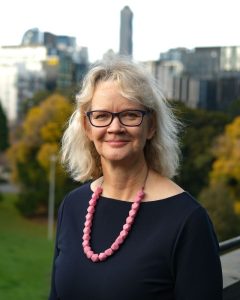
Associate Professor Nicole Rankin
Professor Nicole Rankin, PhD, is an implementation scientist and Head of the Evaluation and Implementation Science Unit in the Melbourne School of Population and Global Health, The University of Melbourne.
Prof Rankin has 25 years’ experience working in cancer research and policy. Her research interests focus on lung cancer screening and early detection as well as capacity building in implementation science. She contributes to a diverse range of implementation research initiatives across cancer, liver fibrosis, smoking cessation, osteoarthritis management and palliative care.
Prof Rankin was the 2020 Leslie (Les) J. Fleming Churchill Fellow; she travelled overseas in 2023 to explore international lung cancer screening programs that focused on disadvantaged populations. She led teams that wrote the Australian National Lung Cancer Screening Program Guidelines (2025) and the Evidence Review for the National Lung Cancer Screening Enquiry (2020), which directly informed the application to the Medical Services Advisory Committee in 2022 to create the Program. The Program is the newest cancer screening program to be launched in the past 20 years.
Find support
You do not have to navigate lung cancer alone. These independent organisations provide trusted information and practical assistance.
Lung Foundation Australia
Information, telephone support and online peer support for people navigating lung cancer or screening.
Cancer Council
Practical, financial and legal support through the Cancer Council in your state or territory.
Rare Cancers Australia
Information, navigation and support for Australians affected by rare and less common cancers.
National Debt Helpline
Free financial counselling if diagnosis or treatment affects work, income, bills or debt.
Services Australia
Free Financial Information Service appointments and Centrelink social work services.
Peer communities
Connecting with other people living with lung cancer can make a real difference. These Facebook groups offer peer support:
- Lung Cancer Awareness / Support Australia
- Young Lung Cancer Patient & Caregiver Group (Diagnosed at 50 or younger)
If you have a specific mutation (for example, KRAS, ALK, EGFR) search Facebook for that mutation or the targeted therapy (e.g. Osimertinib or Tagrisso) that you may be taking.
In memoriam
This future space will honour people who have died with lung cancer and advocates who changed the community. Stories and photographs will only be shared with family permission.